

Prep Time: 30 minutes | Cook Time: 50 minutes | Total Time: 4 hours (includes chilling) | Yields: 8 Servings
Have you ever tasted a dessert that feels like a fluffy cloud and melts in your mouth the moment it touches your tongue? If not, welcome to the magical world of Japanese Cheesecake.
Often called “Cotton Cheesecake” or “Soufflé Cheesecake,” this iconic dessert is a culinary marvel that sits perfectly between a classic American cheesecake and an airy chiffon cake. With its signature jiggle, golden-brown top, and melt-in-your-mouth texture, it is less a cake and more an experience.
Unlike its New York cousin—which is dense, heavy, and unapologetically rich—the Japanese version is light, barely sweet, and incredibly delicate. It’s the kind of dessert you can eat two slices of without feeling weighed down.
In this comprehensive guide, we will unlock the secrets to achieving that gravity-defying rise, that famous wobble, and a crack-free top every single time. Whether you are a novice baker or a seasoned pro, this recipe is your ticket to dessert nirvana.
Why You’ll Love This Recipe
This Japanese Cheesecake isn’t just viral on Instagram for its looks; it delivers on flavor and texture in a way few desserts can.
-
The “Cloud” Factor: Thanks to a meringue base (whipped egg whites), the texture is uniquely aerated and soft, dissolving instantly in your mouth.
-
Subtle Sweetness: It relies on the natural tang of cream cheese and a touch of lemon zest rather than heavy amounts of sugar, making it a sophisticated treat.
-
Showstopper Appeal: There is nothing quite as satisfying as pulling a tall, wobbling cake out of the oven. It’s guaranteed to impress guests.
-
Gluten-Friendly Potential: With a simple swap of the small amount of flour used, it easily becomes a gluten-free favorite without losing texture.
Ingredients Breakdown: The Science of Fluff
To bake like a master, you need to understand your tools. Here is exactly what goes into this cake and why.
The Base
-
Cream Cheese (8 oz / 225g): The heart of the flavor.
-
Expert Note: Use full-fat block cream cheese (like Philadelphia). Do not use tub spreads, as they contain too much water and will make your cake collapse.
-
-
Butter (4 tbsp / 60g): Adds richness and tenderness. Unsalted is best to control the sodium.
-
Milk (1/4 cup / 60ml): Helps to thin the heavy cream cheese into a workable batter.
The Structure
-
Eggs (3 Large):
-
Yolks: Add fat and emulsification for a creamy mouthfeel.
-
Whites: The engine of the cake. They trap air bubbles which expand in the oven, giving the cake its lift.
-
-
Cake Flour (1/4 cup / 30g):
-
Why Cake Flour? It has lower protein content than All-Purpose flour, meaning less gluten development. This ensures the cake stays tender rather than bread-like.
-
Sub: If you don’t have it, mix 3 tbsp All-Purpose flour with 1 tbsp Cornstarch.
-
-
Cornstarch (2 tbsp / 20g): Often paired with flour in this recipe to further tenderize the crumb and stabilize the structure.
The Stability & Flavor
-
Sugar (1/2 cup / 100g): Superfine (caster) sugar dissolves easiest into the meringue.
-
Cream of Tartar (1/4 tsp): An acid that stabilizes the egg whites, ensuring your meringue doesn’t deflate before baking. Lemon juice can be a substitute.
-
Vanilla Extract (1 tsp): For aroma.
Step-by-Step Instructions: Mastering the Technique
Baking a Japanese Cheesecake is a technical challenge, but if you follow these steps meticulously, success is guaranteed.
Phase 1: The Prep Work (Do Not Skip!)
1. Preheat and Prep:
Preheat your oven to 320°F (160°C).
-
Pan Prep: Grease a 6-inch or 8-inch round cake pan generously with butter. Line the bottom and sides with parchment paper.
-
Pro Tip: The parchment paper should rise about 2 inches above the rim of the pan because this cake rises high!
2. The Water Bath Setup:
Japanese cheesecake must be baked in a bain-marie (water bath). This ensures gentle, even heat so the cake doesn’t crack or dry out. Find a large roasting pan that your cake pan fits inside comfortably.
Phase 2: The Cream Cheese Batter
3. Melt and Mix:
In a medium heatproof bowl set over a pot of simmering water (double boiler), add the cream cheese, butter, and milk. Whisk constantly until melted, smooth, and warm. Remove from heat.
-
Why? Warming the mixture ensures there are absolutely no lumps.
4. Add Yolks & Flour:
Whisk in the egg yolks and vanilla into the warm cheese mixture.
Sift the cake flour and cornstarch directly over the bowl. Whisk until just combined and silky smooth.
-
Strain It: For an ultra-smooth texture, pass this batter through a fine-mesh sieve to catch any tiny lumps of flour or egg.
Phase 3: The Meringue (The Critical Step)
5. Whip to Soft Peaks:
In a clean, dry bowl, beat the egg whites on low speed until foamy. Add the cream of tartar.
Increase speed to medium-high and gradually add the sugar (in 3 batches).
-
Stop Point: Beat until Soft Peaks form. This means when you lift the beater, the tip of the egg white falls over gently like a bird’s beak.
-
Warning: Do NOT whip to stiff peaks (like a meringue cookie). Stiff whites are hard to fold and will cause your cake to crack.
Phase 4: The Folding & Baking
6. Fold Gently:
Add 1/3 of the meringue to the cheese batter. Whisk it in gently to lighten the batter.
Add the remaining meringue in two batches, switching to a silicone spatula. Fold using the “J-motion” (cut down the middle, scoop the bottom, fold over). Stop as soon as the streaks disappear.
7. Bake:
Pour batter into the lined pan. Tap the pan on the counter 3 times to pop large air bubbles.
Place the pan inside the roasting pan. Pour hot water into the roasting pan until it comes 1 inch up the sides of the cake pan.
-
Bake at 320°F (160°C) for 20 minutes.
-
Lower heat to 230°F (110°C) and bake for another 40-50 minutes.
-
Note: This “low and slow” method prevents the cake from rising too fast and cracking.
-
8. The Cool Down:
Turn off the oven. Leave the oven door slightly ajar (stick a wooden spoon in the door) and let the cake cool inside for 15 minutes. This gradual cooling prevents it from collapsing suddenly due to temperature shock.
Troubleshooting Guide: Why Did My Cake…
Even the best bakers struggle with this cake. Here is how to fix common issues.
…Crack on Top?
-
Cause: The oven was too hot, causing the cake to rise faster than the structure could set.
-
Cause: The meringue was whipped too stiff.
-
Fix: Use an oven thermometer to verify your temp, and stop whipping at soft peaks.
…Collapse/Shrink?
-
Cause: Undercooked. The structure wasn’t set enough to hold its own weight.
-
Cause: Sudden temperature change (taking it out of the oven too fast).
-
Normalcy: Note that Japanese Cheesecake will shrink slightly as it cools—that is normal! But it shouldn’t collapse into a pancake.
…Have a “Wet” Layer at the Bottom?
-
Cause: The batter separated, or water leaked into the springform pan.
-
Fix: If using a springform pan, wrap the outside bottom in 3 layers of heavy-duty foil to waterproof it. Better yet, use a solid-bottom cake pan (push pans work great too).
Serving & Storage
How to Serve:
-
Warm: When fresh, it is like a fluffy soufflé.
-
Chilled (Recommended): After 4 hours in the fridge, the flavor deepens and the texture transforms into a velvety, creamy mousse-like cake. This is how most bakeries serve it.
Storage:
-
Refrigerator: Keep in an airtight container for up to 3 days.
-
Freezer: Wrap individual slices in plastic wrap and foil. Freeze for up to 1 month. Thaw slowly in the fridge.
Variations to Try
-
Matcha Soufflé: Add 1 tbsp of high-quality Matcha powder with the flour.
-
Chocolate Cloud: Melt 1/4 cup dark chocolate into the cream cheese base.
-
Lemon Zest: Add zest of 1 lemon for a brighter flavor profile.
Frequently Asked Questions (FAQ)
Q: Can I use a blender?
A: No. A blender will knock all the air out of the batter, and you need air for the rise. Use a hand mixer or stand mixer for the whites, and a hand whisk for the rest.
Q: Why water bath?
A: The water creates steam, which keeps the oven moist and ensures the heat is gentle. Without it, the edges would burn before the center cooks.
Q: Is it supposed to be jiggly?
A: Yes! When you take it out, it should jiggle like Jell-O. As it cools, it sets into a firmer (but still soft) texture.
Now, grab your whisk and get ready to make the fluffiest dessert of your life!
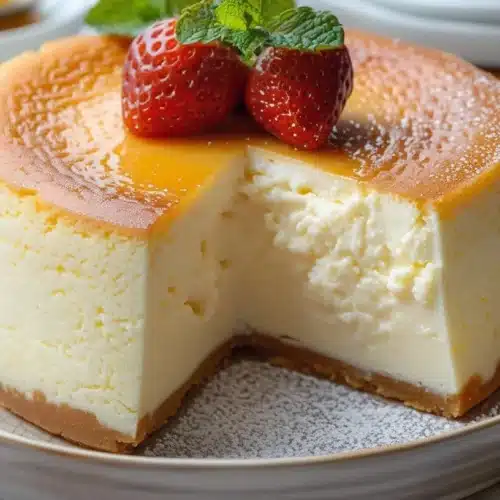
Japanese Cheesecake
Ingredients
Cheesecake Base
- 8 oz cream cheese, softened Primary flavor and base.
- 1/2 cup granulated sugar
- 1/4 cup milk
- 3 large eggs, separated Essential for structure and aeration.
- 1 teaspoon vanilla extract
- 1/4 cup cake flour For light and airy texture.
- 1/4 teaspoon cream of tartar Helps stabilize whipped egg whites.
- Pinch salt Enhances flavor.
Instructions
Preparation
- Preheat your oven to 320°F (160°C) and prepare a 9-inch round cake pan by greasing it and lining the bottom with parchment paper. Pro Tip: Use a springform pan for easy removal later!
- In a large bowl, beat the softened cream cheese with granulated sugar until smooth. Add milk and vanilla extract, mixing until well combined. Pro Tip: Scrape down the sides of the bowl to ensure all ingredients are incorporated.
- Beat in the egg yolks one at a time, mixing well after each addition. Then sift in the cake flour and mix until just combined. Pro Tip: Make sure the flour is sifted to avoid lumps.
- In a separate bowl, whip the egg whites and cream of tartar until soft peaks form. Gradually add the remaining sugar, whipping until stiff peaks form. Pro Tip: Be careful not to overwhip.
- Gently fold the whipped egg whites into the cream cheese mixture in thirds, being careful not to deflate the batter. Pro Tip: Use a rubber spatula and a gentle motion.
- Pour the batter into the prepared pan and smooth the top. Place the cake pan in a larger baking dish and fill the dish with hot water until it reaches halfway up the sides of the cake pan. Bake for 40-50 minutes or until the top is golden brown and slightly jiggly. Pro Tip: Avoid opening the oven door during baking.
- Once baked, turn off the oven, crack the door, and let the cheesecake cool in the oven for 30 minutes. Remove it from the water bath and refrigerate for at least 4 hours.